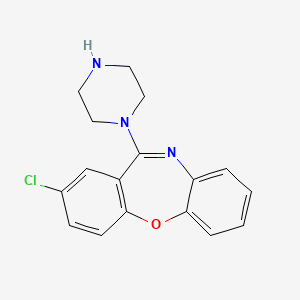
Find verified Amoxapine API manufacturers, suppliers, and distributors across the globe. Explore companies that offer high-purity Amoxapine for pharmaceutical use, along with product details, certifications, and reliable sourcing options. Compare prices, check availability, and connect directly with trusted suppliers for Amoxapine API.
Alternate Names: Moxadil, Amoxan, Desmethylloxapin, Defanyl
CAS No: 14028-44-5
PubChem CID: 2170
Mol Formula: C17H16ClN3O
Mol Weight: 313.77 g/mol
IUPAC Name: 8-chloro-6-piperazin-1-ylbenzo[b][1,4]benzoxazepine
API Description: Amoxapine can cause developmental toxicity according to state or federal government labeling requirements. Amoxapine is a dibenzooxazepine compound having a chloro substituent at the 2-position and a piperazin-1-yl group at the 11-position. It has a role as an antidepressant, an adrenergic uptake inhibitor, a dopaminergic antagonist, a serotonin uptake inhibitor and a geroprotector. Amoxapine, the N-demethylated derivative of the antipsychotic agent loxapine, is a dibenzoxazepine-derivative tricyclic antidepressant (TCA). TCAs are structurally similar to phenothiazines. They contain a tricyclic ring system with an alkyl amine substituent on the central ring. In non-depressed individuals, amoxapine does not affect mood or arousal, but may cause sedation. In depressed individuals, amoxapine exerts a positive effect on mood. TCAs are potent inhibitors of serotonin and norepinephrine reuptake. In addition, TCAs down-regulate cerebral cortical β-adrenergic receptors and sensitize post-synaptic serotonergic receptors with chronic use. The antidepressant effects of TCAs are thought to be due to an overall increase in serotonergic neurotransmission. TCAs also block histamine H1 receptors, α1-adrenergic receptors and muscarinic receptors, which accounts for their sedative, hypotensive and anticholinergic effects (e.g. blurred vision, dry mouth, constipation, urinary retention), respectively. See toxicity section below for a complete listing of side effects. Amoxapine may be used to treat neurotic and reactive depressive disorders, endogenous and psychotic depression, and mixed symptoms of depression and anxiety or agitation.